During my communication with BIAE, BIAE board members have very kindly clarified some points regarding what to expect when going to a BIAE member for treatment.
Bear in mind that the following advice comes from BIAE board members who have 200+ years of collective experience, expertise and knowledge in electrolysis!
“There is no expectation for the practitioner to give any instruction prior to the consultation appointment as they will then have to repeat it during the consultation.”
When booking a consultation with a BIAE member do not expect any information that could help with treatment because BIAE members will just have to repeat this in person.
A competent professional body would encourage their members to provide electrolysis preparation advice.
As consumers of electrolysis, if we can take steps to help with treatment, we will!
Electrolysis is not cheap or quick and we will do what we can to make it a more effective endeavour. We should not lose out just because a BIAE member doesn’t like repeating themselves.
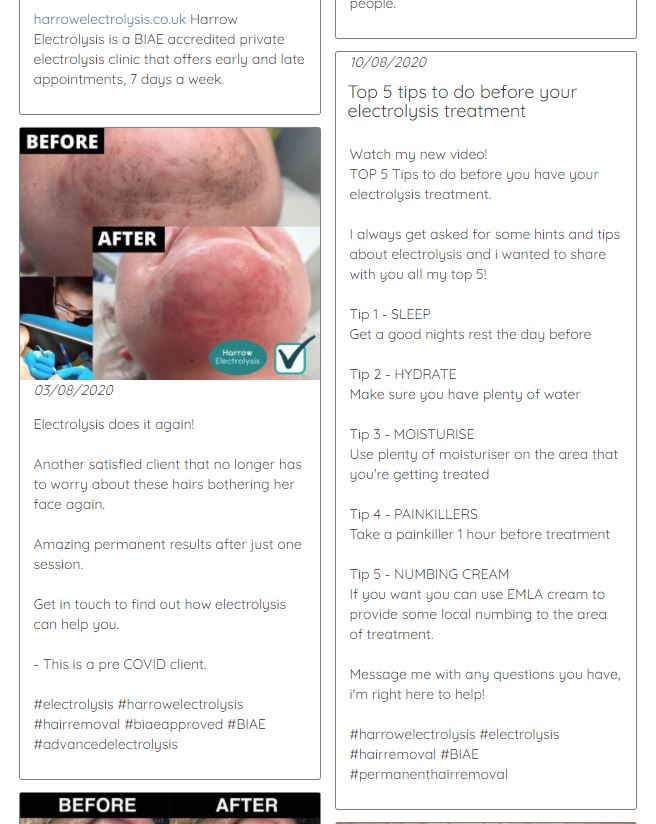
“There is no requirement to increase water intake unless you are severely dehydrated. It is a common misconception that water intake has an impact on the effectiveness on the treatment. The practitioner would need to examine your skin first to determine if you are severely dehydrated.”
According to BIAE water intake doesn’t matter unless you’re severely dehydrated.
Good thing they don’t help us by telling us to drink water beforehand just in case.
When I went for treatment with the chairperson, it was extremely painful. Now if my pain was exacerbated by dehydration, then this could have easily been avoided if I was told to increase water intake beforehand. Hydrated skin and hair follicles make electrolysis easier and less painful!
Does BIAE not want clients to have effective treatment and be comfortable?
Why do some BIAE members contradict the board’s advice on their personal websites? Who should we believe?
“Glycolic acid products may or may not affect your treatment depending on their strength.”
Why leave it to chance? Why not help us by advising us beforehand what we should be doing so that treatment goes smoothly? Why expose us to pain that can easily be avoided?
Why is so much important information being withheld just because BIAE don’t want to repeat themselves?
This makes BIAE seem extremely callous.
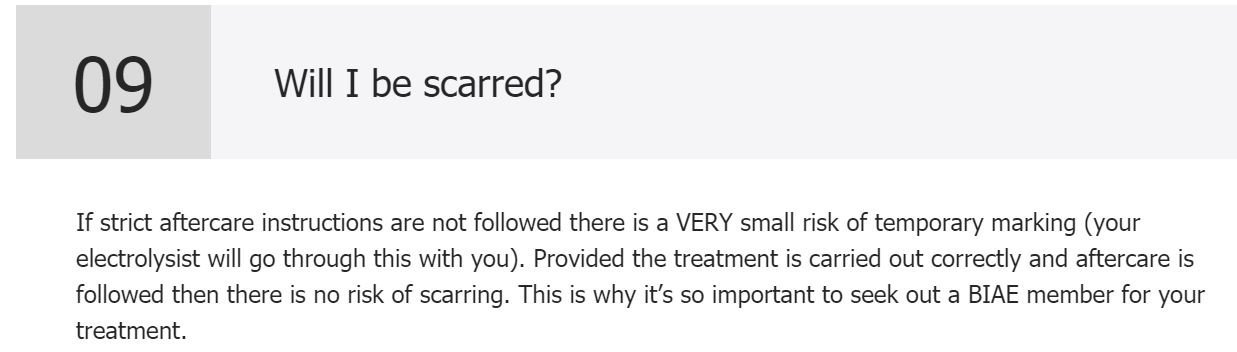
“Hyperpigmentation and scarring are other common misconceptions.”
“Hyperpigmentation and scabbing are not side effects in the negative meaning of the phrase. They are normal phases of the skin’s healing process.”
On one hand BIAE say that hyperpigmentation is a misconception, on the other they say it’s normal. Which is it?
The chairperson did not tell me that electrolysis would result in hyperpigmentation. As a direct result of her treatment, I now have new hyperpigmentation on my face. It would have been nice to know that this would be a side effect so that I could have made an informed decision, but the chairperson withheld this important information.
If hyperpigmentation is a normal side effect of electrolysis, then why is this not mentioned anywhere on the BIAE website?
“Making a set treatment plan at the time of the consultation is not appropriate as it will change based on the feedback from your skin and hair frequently.”
A truly experienced and knowledgeable electrologist is able to give a better idea of how many hours it would take to treat an area.
A good electrologist will create a treatment plan in collaboration with the client!
We, the consumers, understand that plans need to have some flexibility and will need to be adapted.
Why is BIAE being vague about what is standard practice in the beauty industry when giving out timescales?
Sterex provides a consultation guide which gives better, and more accurate information about timescales than BIAE.
Note that some BIAE members are also Sterex-trained. Sadly, this does not guarantee that you will receive adequate treatment. The chairperson who gave me bad treatment is Sterex-trained and she did not follow Sterex’s consultation procedure.
“The treatment methods of electrolysis are rather scientific and complicated, and we discourage practitioners from getting into too much technical detail as it may sound scary to people who don’t understand what it all means.”
They don’t want their members telling clients what they’re doing to their faces/bodies because it’ll scare them!
It is our body, we get to decide what we want done to it. By making this decision for us, BIAE are taking away our autonomy and ability to make an informed decision about treatment.
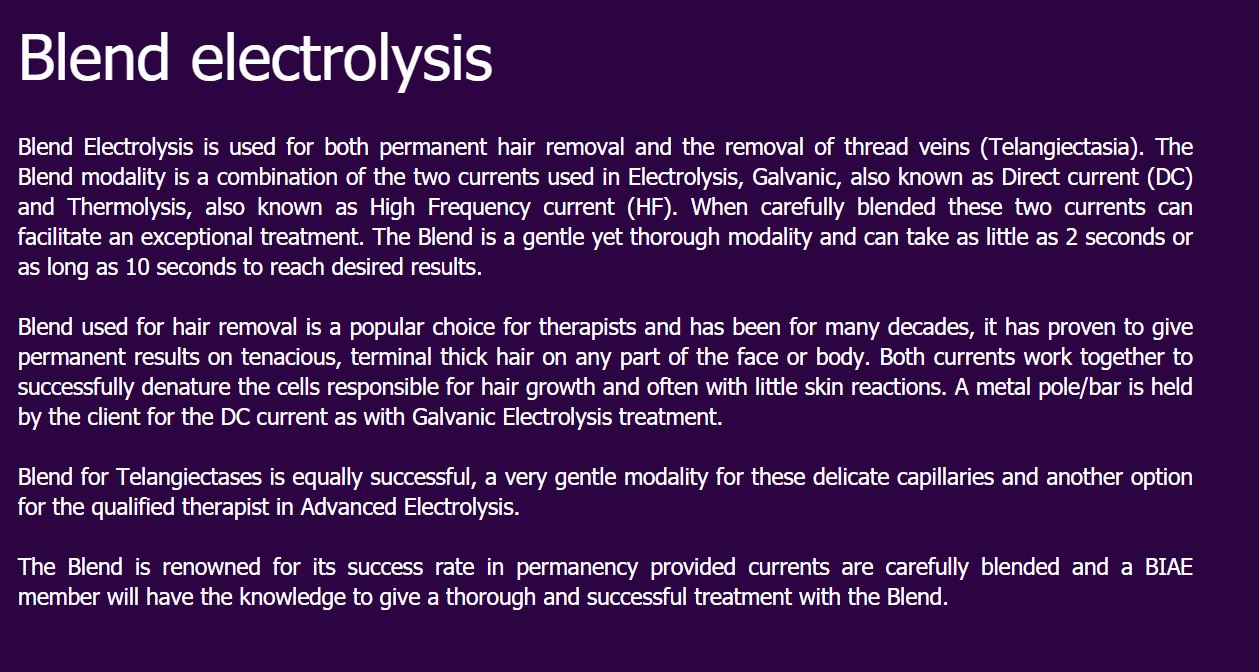
If BIAE doesn’t want to get too technical so that we don’t scared, then why do they use ‘scary’ language on their own website when describing electrolysis?
If BIAE is unable to explain electrolysis to laypeople then perhaps they should cease working on them until they can.
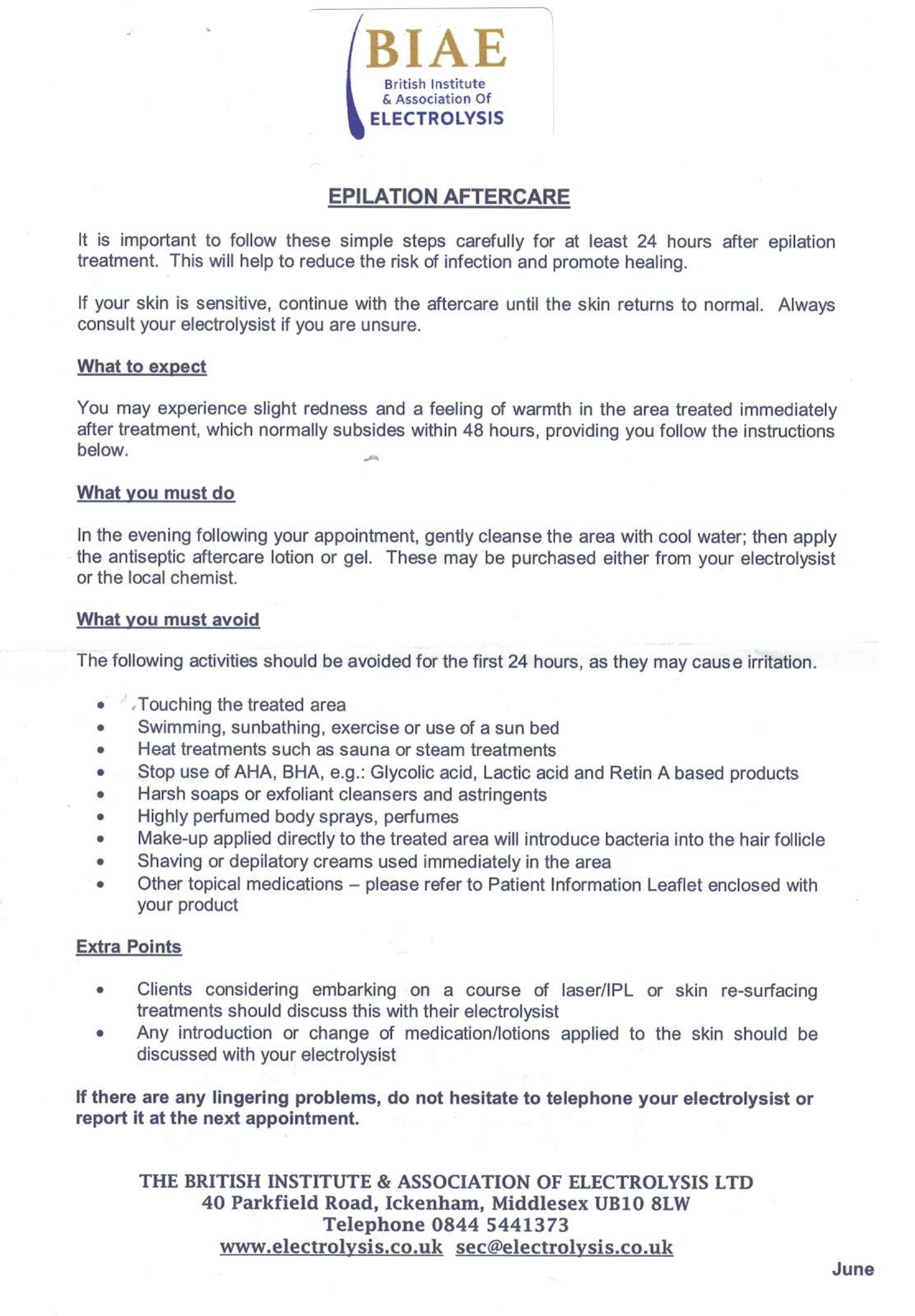
“Our aftercare leaflet which you have received at your consultation is the approved aftercare advice for electrolysis treatment.”
After my treatment, the chairperson handed me a leaflet and told me to put some lotion on my face. This is all the aftercare advice I got.
The leaflet is so dated that it has the old BIAE address on it and has a new logo sticker covering the old one.
How often does BIAE update their literature?
Are they really at the forefront of electrolysis in the UK?
“It is concerning that people still choose to believe random internet sources instead.”
If BIAE had a better website, with better information on it then there would be no reason to search for more up-to-date and accurate electrolysis information.
These ‘random internet’ myths, which some BIAE members themselves perpetuate, would not even exist if BIAE did a better job of dispelling them.

 Safe Electrolysis